
Bauhaus Knowledge in a Nutshell: FAQs About the Bauhaus
Lorem Ipsum
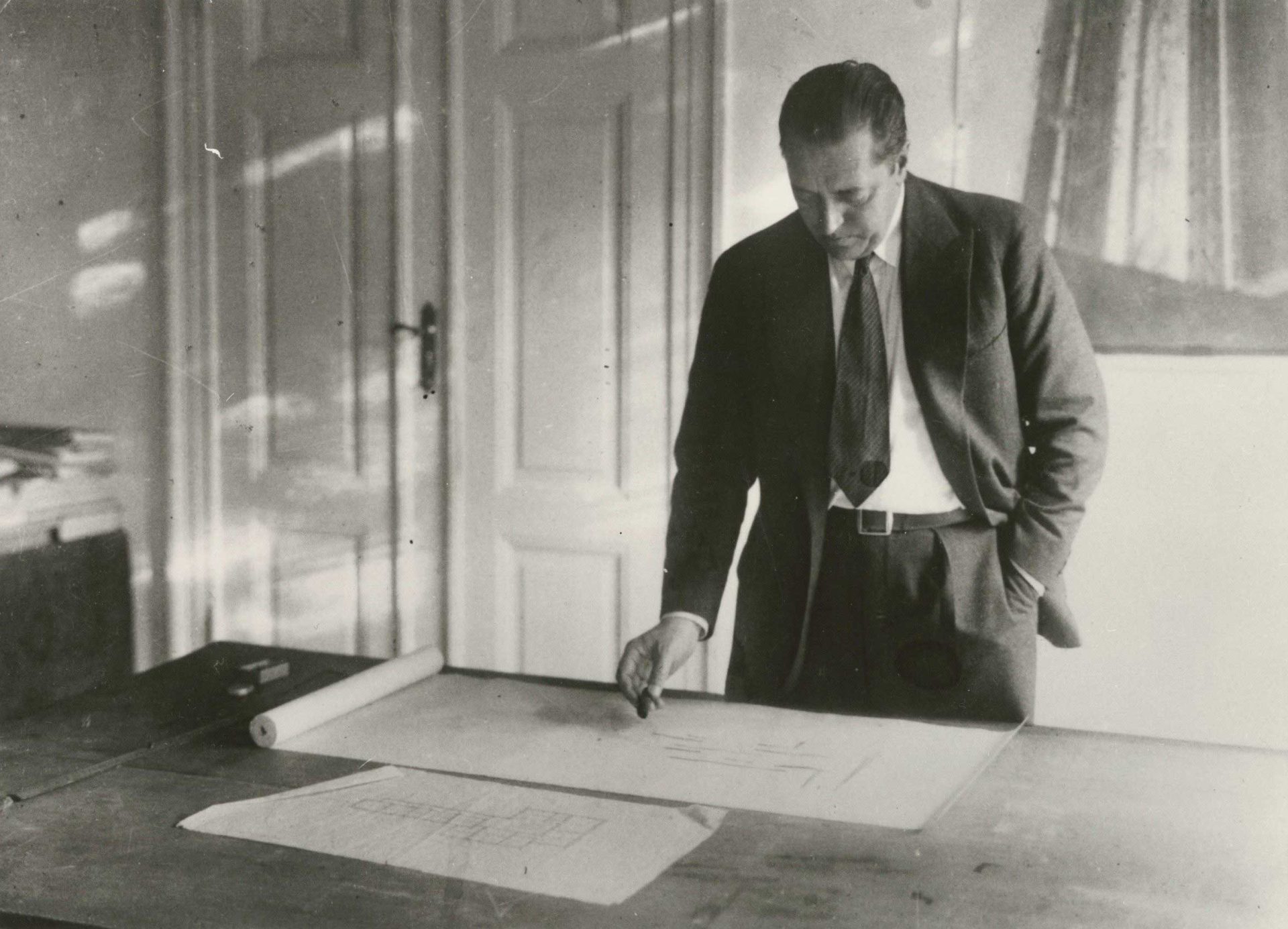
The Bauhaus was a school. Walter Gropius founded it in 1919 with the aim of training a new generation of designers and architects. To this end, students were taught in various workshops after completing the so-called preliminary course. The number and focus of the workshops, as well as the supplementary educational programme, changed repeatedly during the 14 years of the Bauhaus’s existence.
You can find out more about the Bauhaus here.
- Lorem ipsum dolor sit amet, consetetur sadipscing elitr
There is no official document recording the founding of the Bauhaus. The word Bauhaus appears for the first time in Walter Gropius’s employment contract as director of the Bauhaus, which he signed on 12 April 1919.
- Lorem ipsum dolor sit amet, consetetur sadipscing elitr
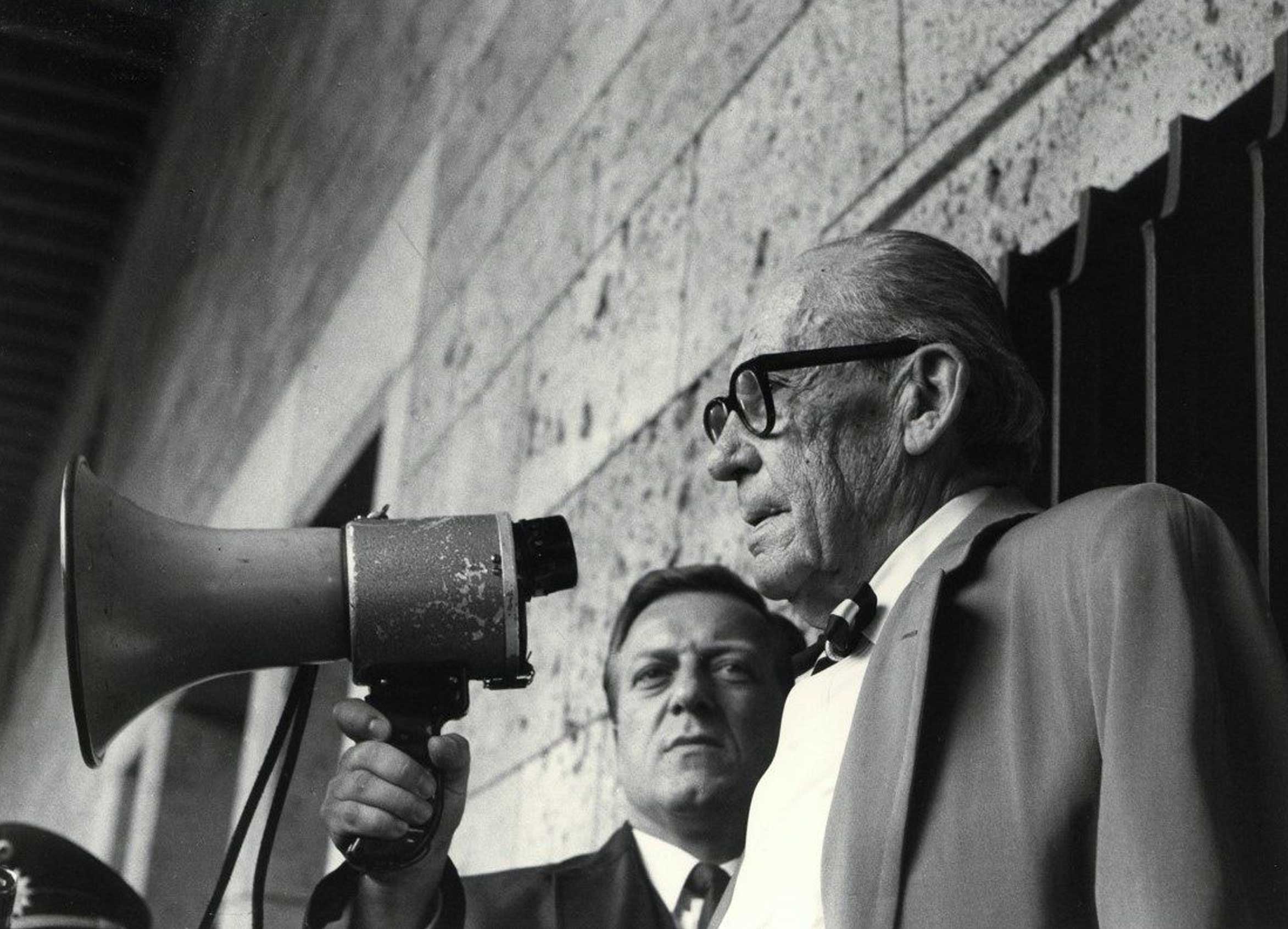
The Bauhaus in Berlin – at that point, a privately run school – was sealed off on 11 April 1933 after being searched by the Nazis. In the early summer, Director Ludwig Mies van der Rohe received permission to reopen the school on the condition that he dismiss Jewish and politically undesirable members of the teaching staff. The remaining staff would be required to join the Nazi Party. At almost the same time, their salaries, which had previously been paid by the city of Dessau, were terminated. Due to these financial and political difficulties, Mies van der Rohe closed the school on 19 July 1933.
- Lorem ipsum dolor sit amet, consetetur sadipscing elitr
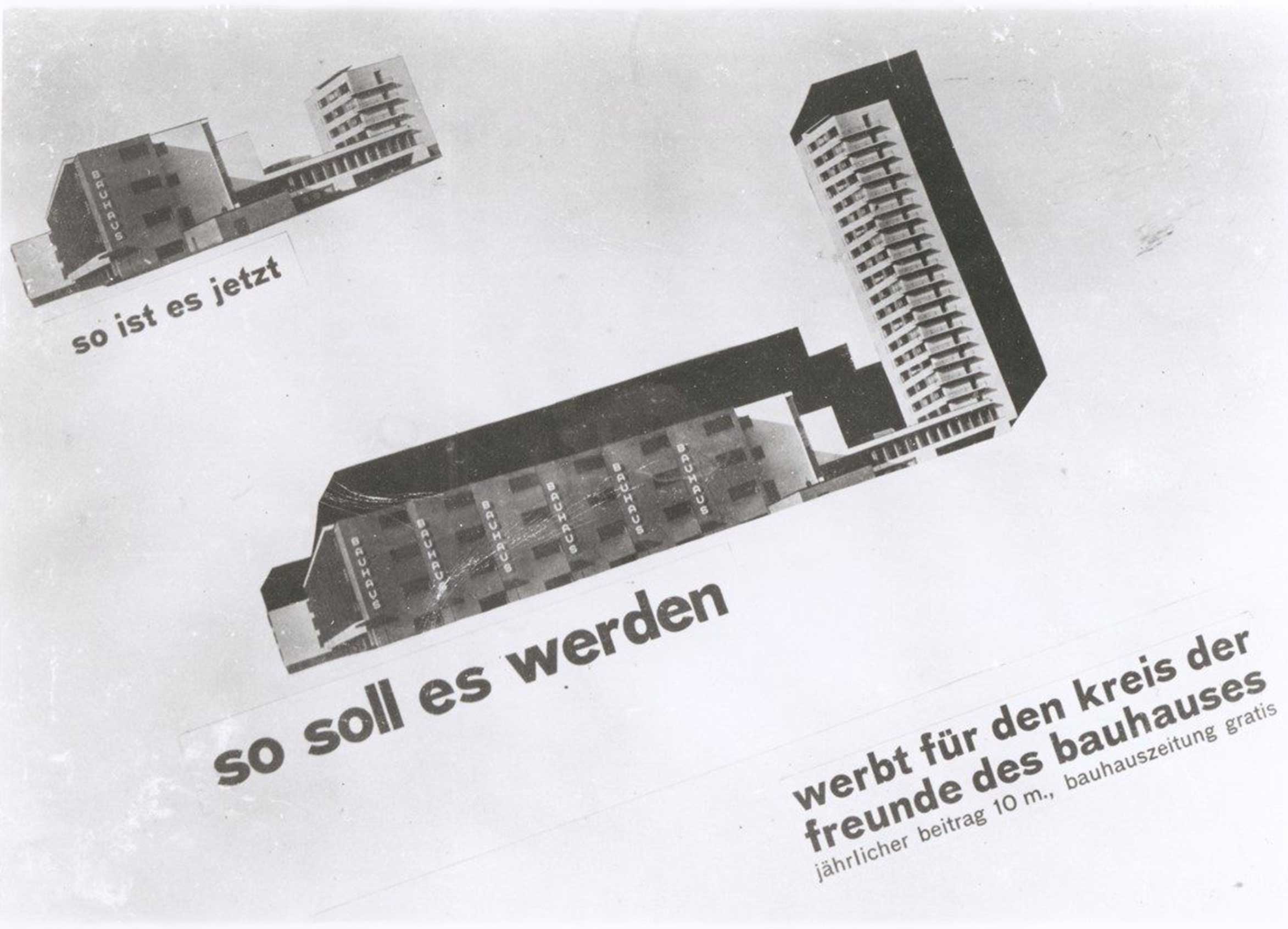
The Bauhaus was founded in Weimar in April 1919 by Walter Gropius. After the Thuringian government drastically cut funding in 1925, the Bauhaus moved to Dessau in April 1925. In September 1932, the school was forced to close there, as well, when the Nazis took control of the local council. The Bauhaus then moved to Berlin, where it was permanently disbanded in July 1933.
- Lorem ipsum dolor sit amet, consetetur sadipscing elitr
Teaching staff at the Bauhaus were referred to as masters; a distinction was made between form masters, who led the workshops artistically (and included famous artists such as Paul Klee, Wassily Kandinsky and Johannes Itten), and craft masters, who taught craft and technical skills. With the move to Dessau in 1925, the title “young master” was introduced for former students of the school. When the Bauhaus was designated a university of design in 1926, its teaching staff were given the title of professor.
- Lorem ipsum dolor sit amet, consetetur sadipscing elitr
Bauhaus is not a style. The school itself, as well as the works created by its members, were very diverse. Therefore, the Bauhaus cannot be identified through individual colours or stylistic features.
- Lorem ipsum dolor sit amet, consetetur sadipscing elitr
There are no Bauhaus colours and shapes. However, students, particularly in the classes taught by Paul Klee and Wassily Kandinsky, intensively explored the effects of colours and shapes. Wassily Kandinsky conducted a survey among students to find out which of the primary colours red, blue and yellow they would associate with the basic shapes triangle, square and circle. The results were very ambiguous.
- Lorem ipsum dolor sit amet, consetetur sadipscing elitr
The BeBA (Research centre for biographies of former Bauhaus members) at the University of Erfurt has made its comprehensive database available online (only in German): https://bauhaus.community/
- Lorem ipsum dolor sit amet, consetetur sadipscing elitr
Founded in 1919, the Bauhaus attracted numerous female students who, like their male counterparts, first completed the preliminary course before continuing their training in the various workshops. Female students usually received a recommendation to study weaving, but a few were also accepted into other workshops based on their own requests. Many of them created unique works that still shape our image of modernism today. Nevertheless, the achievements of female members of the Bauhaus – at that time and in the later reception of the Bauhaus – have not been appreciated to the same extent as those of their male colleagues. For example, with the exception of Gunta Stölzl, Gertrud Grunow, Marianne Brandt and Lilly Reich, the teaching staff were almost exclusively male. When looking at the situation of women at the Bauhaus from today’s perspective, it is important to remember that the Bauhaus masters were all born in the 19th century and shaped by a patriarchal society. Measured against the conditions of that time, women at the Bauhaus were able to live and work more freely than at other institutions.
- Lorem ipsum dolor sit amet, consetetur sadipscing elitr
The term Bauhaus buildings refers to works by Bauhaus staff and students – or, in a narrower sense, only those created during their time at the Bauhaus. There are only a few of these in Berlin. However, the legacy of architectural modernism, ranging from original Bauhaus buildings to examples of the New Architecture and post-war modernism, can be found throughout Berlin and the surrounding area.
- The Bauhaus-Tours, carried out in cooperation with Ticket B – Experience architecture, take you to important modernist sites and works by Bauhaus members in Berlin and the surrounding area.
- The Lemke House in Berlin-Hohenschönhausen, now known as the Mies van der Rohe Haus, was designed by Ludwig Mies van der Rohe while he was still director of the Bauhaus, and it can therefore be considered a Bauhaus building in the strict sense (1932/33).
- The same applies to the former ADGB trade union school in Bernau, which is located north-east of Berlin and is now known as the Bauhaus Denkmal Bernau. This building complex, which is the only structure designed and realised as an integrated whole by the second Bauhaus director, Hannes Meyer, was built between 1928 and 1930. Today, it is part of the UNESCO Bauhaus World Heritage Site.
- The large Siemensstadt housing estate is a prime example of the New Architecture in Berlin. In addition to Otto Bartning, Hugo Häring, Fred Forbát and Hans Scharoun, Walter Gropius was also involved in this development. Find out more in our photo series Where light, air and sun become constructed reality.
Hans Scharoun’s combination flat-studio, which features some of its original furnishings, can be viewed by appointment: https://scharoun-gesellschaft.de/. - The city of Berlin provides a detailed overview of the six housing estates of Berlin Modernism that have been added to the UNESCO World Heritage List.
- The database of the Berlin State Monuments Office can be searched using keywords such as “Bauhaus” or “Neues Bauen” (New Architecture).
- The free app Gropius to Go was developed by the Berlin State Monuments Office as a digital Gropius city guide.
- Most of the original Bauhaus buildings are located in Dessau, just two hours by train from Berlin. Since 2019, visitors have also been able to visit the Bauhaus Museum there. The Bauhaus Dessau Foundation provides information about Bauhaus buildings in Dessau on its website.
- In Weimar, the birthplace of the Bauhaus, you can also visit the old school building designed by Henry Van de Velde. It is also worth visiting the Bauhaus Museum there as well as the Haus Am Horn, which was built in 1923 as a model house for the first Bauhaus exhibition.
- The Bauhaus Travel Book takes you to over 100 sites of classic modernism in Germany and around the world.
- The Grand Tour of Modernism brings together important and accessible buildings constructed between 1900 and 2000, taking you on a journey through 100 years of architectural history.
Do you have any questions? Please feel free to contact us at faq@bauhaus.de.
Bauhaus Insights
-
The Bauhaus: The Idea Behind the School and Its Educational Programme
Bauhaus Insights -
Preliminary Course, Workshops and Bauhaus Diploma: What Made Training at the Bauhaus So Special?
Bauhaus Insights -
Work, Fun and Community: The Bauhaus Was a Place of Learning – But Also a Way of Life.
Bauhaus Insights -
14 Years of Bauhaus: A Chronology From Its Founding in 1919 to Its Closure in 1933
Bauhaus Insights -
The Bauhaus in Exile: What Happened After its Closure in 1933
Bauhaus Insights