

New Woman,
New Vision.
Women Photographers of the Bauhaus
The Weimar Republic (1919–1933) was a time of social and cultural upheaval. The young democracy was confronted not only with the consequences of World War I, but also a rapid succession of technical advances, the rise of new media and a society that was questioning traditional values.
-
Women’s role in society was changing as well. As voting rights were granted to women for the first time in November 1918, a new chapter of political participation began. It was also a time when more and more women aspired to financial independence and professional self-realisation. Photography offered them an ideal opportunity in both arenas – it promised artistic freedom and a living income. The camera became the tool of female self-empowerment.
-
By the late 19th century, photography had become a significant occupational field for women. Because it was a relatively young field, regarded as a handcraft and not yet academically anchored, photography offered women career opportunities at an early stage. Women were believed to have skills that were well-suited to certain photographic activities, such as portrait photography or retouching. Consequently, a growing number of women began learning the trade in photo studios. In 1890 the Berlin Lette Association started a photography course for women, and in 1905, the Teaching and Research Institute for Photography in Munich followed suit with institutional training for women photographers.
-
The number of women photographers rose steadily in the Weimar Republic. This occurred as an increasing number of higher education institutions began offering training courses in photography. The Bauhaus Dessau established a photography course in 1929. Many students – almost half of them women – received professional training there. Yet women photographers had been playing a central role at the Bauhaus even years before. In the early 1920s, photography was used to advertise the products and works created by the influential school of art, design and architecture – and many of those photos were taken by professional women photographers, such as Paula Stockmar, the women-managed Atelier Hüttich und Oemler, and Lucia Moholy. The increasing prevalence of the small-format camera after 1925 sparked a surge of interest in the medium among the students. Many female students began observing their surroundings through the camera lens and captured new and unusual perspectives. While many of these photos have since become world-famous, the women who took them have often been forgotten.
The Exhibition
The exhibition “New Woman, New Vision. Women Photographers of the Bauhaus” is the first ever to explore the extensive impact of these photographers and tell their story from a gender-historical perspective. The presentation, comprising some 300 works from 29 photographers from the Bauhaus-Archiv / Museum für Gestaltung collection, explores art- and media-historical questions and how they relate to such topics as authorship, visibility and social participation. The exhibition presents photographs by well-known figures such as Lucia Moholy and Florence Henri, as well as works by artists who have received less recognition, including Irene Hoffmann and Grit Kallin-Fischer. Not only does its scope extend beyond the era of the historic Bauhaus, it also highlights the later works by these remarkable artists. The presentation is supplemented by works by women artists from the Institute of Design in Chicago, the American successor institution to the Bauhaus founded by Bauhaus master László Moholy-Nagy in 1937.
Key Themes
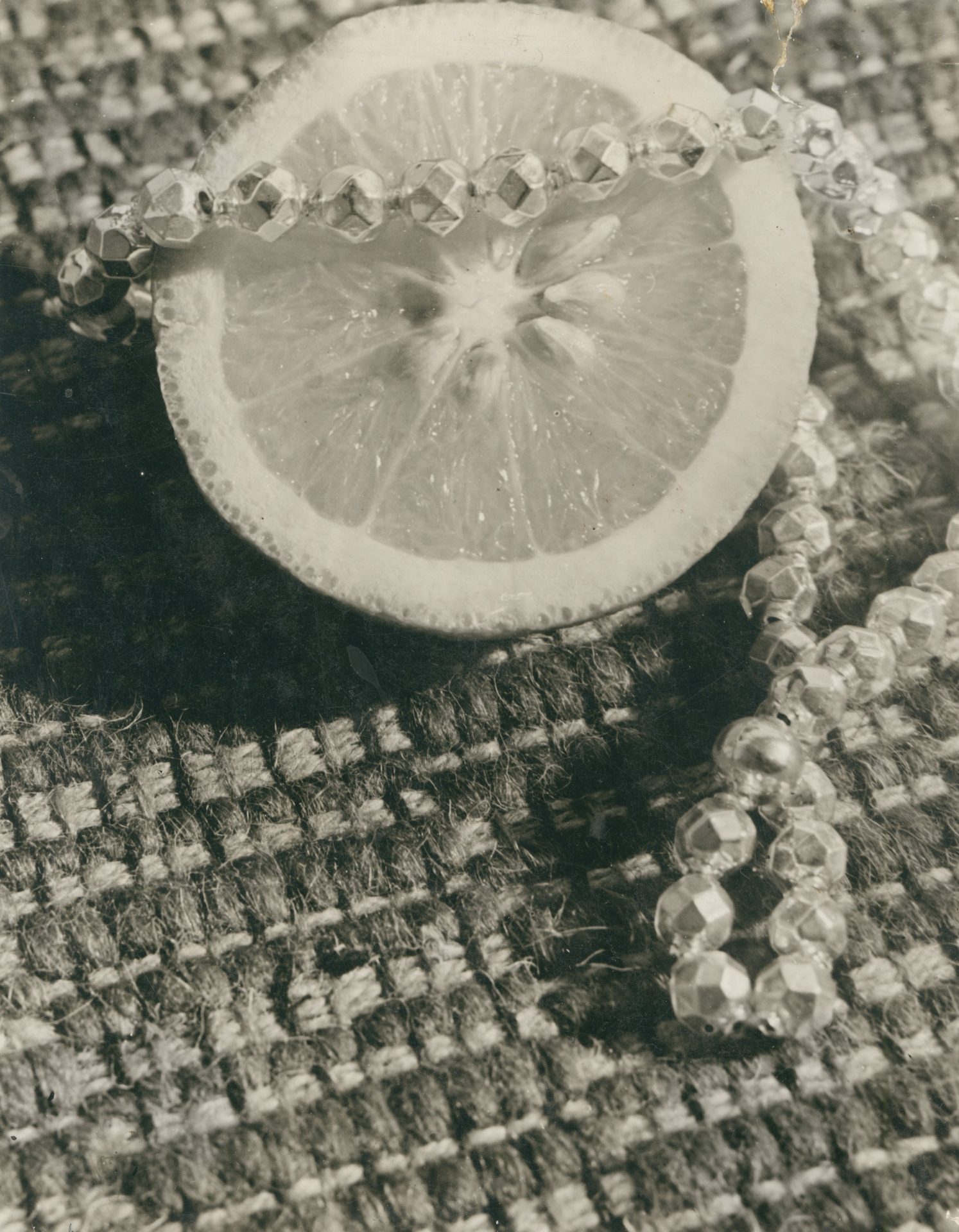
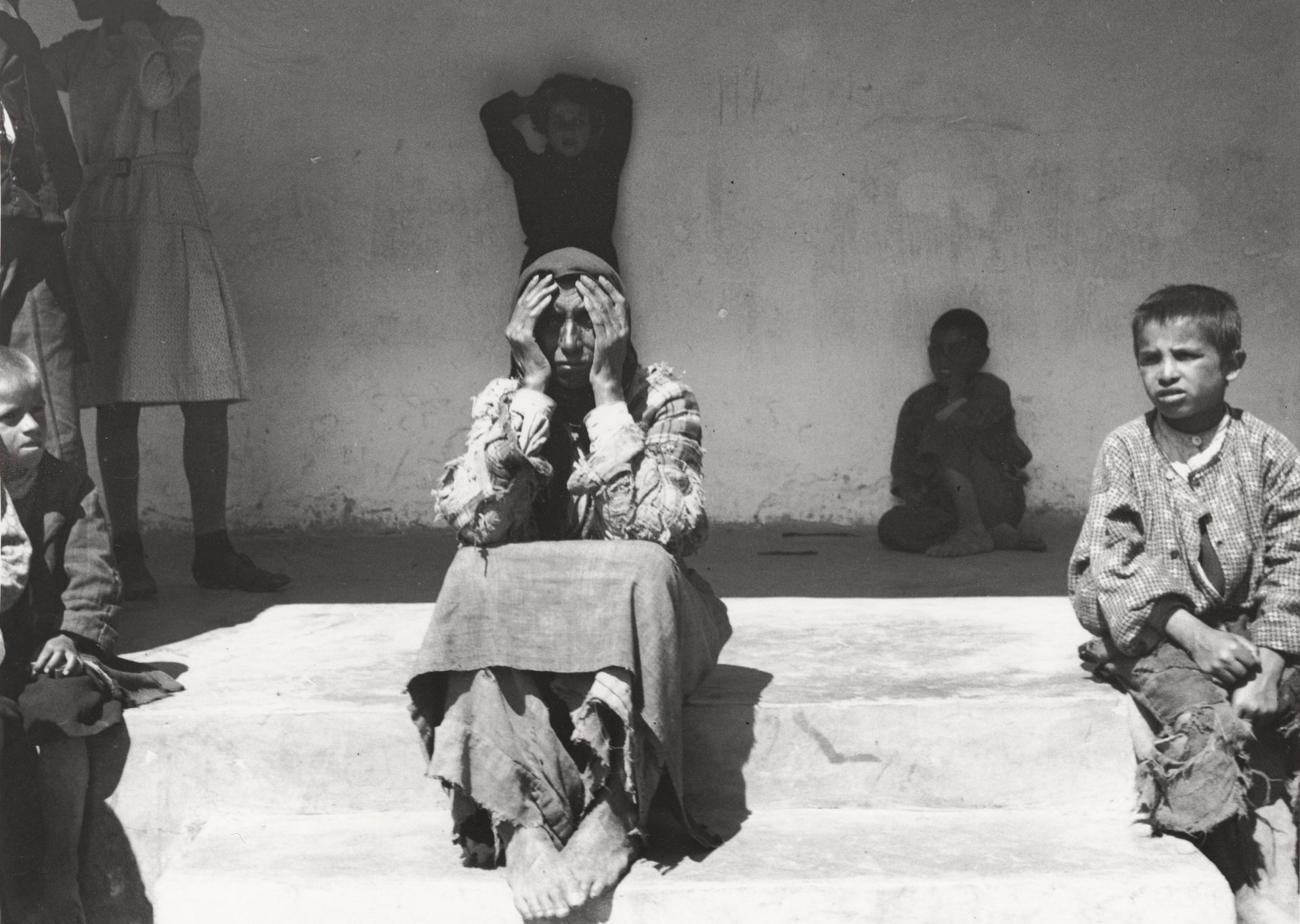
One of the central themes of the exhibition is portrait photography. The chapters “Viewing the Self” and “Woman’s Images” examine how the photographers and their fellow female classmates presented themselves against the backdrop of society’s evolving image of women. Oftentimes they referred to the ideal of the New Woman – which had become ubiquitous in the Weimar Republic – and translated it into the modern visual imagery of New Vision. Another chapter sheds light on the photography lessons taught by Walter Peterhans at the Bauhaus. In portraits, landscapes, nature studies and still lifes, the students experimented with and selectively integrated photographic design elements into their works, e.g. textures, materiality, directed lighting and image sharpness. The chapter “Art and Experimentation” focuses specifically on experimental practice; photo collages and photograms offered forms of expression beyond what the camera could capture and illustrate how readily the women photographers embraced the avant-garde. The chapter “People and Countries” is dedicated to social-documentary and photo-journalistic works. The photos capture everyday life, social inequality and moments of political upheaval. They also show how the photographers, who were often forced into exile, safeguarded their work under changing political circumstances. The chapter “The Allure of Architecture” examines modern architectural photography. Unusual perspectives, extreme high- and low-angle shots, and close-ups helped architectural photography break away from its original documentary function and transform it into artistic and sometimes abstract visual compositions.
-
The exhibition shows how the women photographers of the Bauhaus used photography as an artistic and social instrument – for achieving greater self-determination, conducting artistic experimentation and documenting social and political realities. Its relevance today is evident in how integral these methods have become in contemporary art. The Berlin artists Kalinka Gieseler, Caroline Kynast and Sinta Werner engage in the discourse as contemporary voices. Like their historic role models, they too use photographic images to analyse space and society and probe the boundaries of the medium.
Relevance Today
When reflecting on women photographers and their life stories from a gender-critical perspective, the first question we encounter is what we mean by the term “women”. We do not mean a clearly defined or homogenous group, but rather a historical attribution that mirrors the respective social norms of the time. The biographies of these women photographers are as varied as their personal convictions, predilections and relationships. What they all have in common, however, is the traditional gender roles they were assigned which limited their career opportunities and even worsened them under National Socialism and in post-war Western Europe. In that male-dominated art world, their works were marginalised and driven from art-historical memory – a structurally induced invisibility, the effects of which are still felt today.
-
Against this background, we must ask what role exhibitions have that are specifically dedicated to women artists. Do we not run the risk of perpetuating existing attributions and designating female-perceived individuals once again as a special case? The answer is complex. Back in 1914 the art historian Emmy Voigtländer, reporting on the Leipzig exhibition “Das Haus der Frau”, remarked: ‘Perhaps in the future the most valuable outcome of these special exhibitions will be to prove their superfluousness, in that women’s achievements will gradually become a widely accepted part of general cultural activity where one recognises the value of the work and then of its creators [...].’ Based on current figures, however, this goal has not yet been achieved. Recent studies show, such as one conducted by the Berlin initiative “fair share!”, that works by female-perceived persons and especially mothers are presented and collected less often and obtain lower market prices and less funding. As long as gender equality in the art world remains elusive, visibility in the form of such exhibitions will remain necessary – not to emphasise distinction, but as a means to combat structural forgetting.