
5+1 questions for Martin Binder about his concept “Hausbau. Eine Spurensuche”
In our interview with artist Martin Binder, we discuss his concept “Hausbau. Eine Spurensuche”, with which he secured first place in the “Kunst am Bau” competition at the Bauhaus-Archiv / Museum für Gestaltung.
Lorem ipsum
-
Congratulations, Martin Binder! Your concept took first place among all twelve submissions and was “recommended for realisation” by the jury. What does that mean?
It means that the jury agreed that my proposal should be implemented. The “recommendation for realisation” also means that there’s still a lot to be considered. That’s a typical formulation for “Kunst am Bau”. Every competition ends with this kind of recommendation for realisation. It might sound oddly technical or jargon-like – which it probably is – but there’s clearly plenty of loose ends in my concept. And that’s what makes it so exciting. With its decision, the jury gave me the green light to proceed with the project and make the design a reality. What remains to be seen is how everything will look in the end, and where the pictures for my work will be taken. -
Your concept “Hausbau. Eine Spurensuche” requires a photograph of a very large tree. How does one go about doing that?
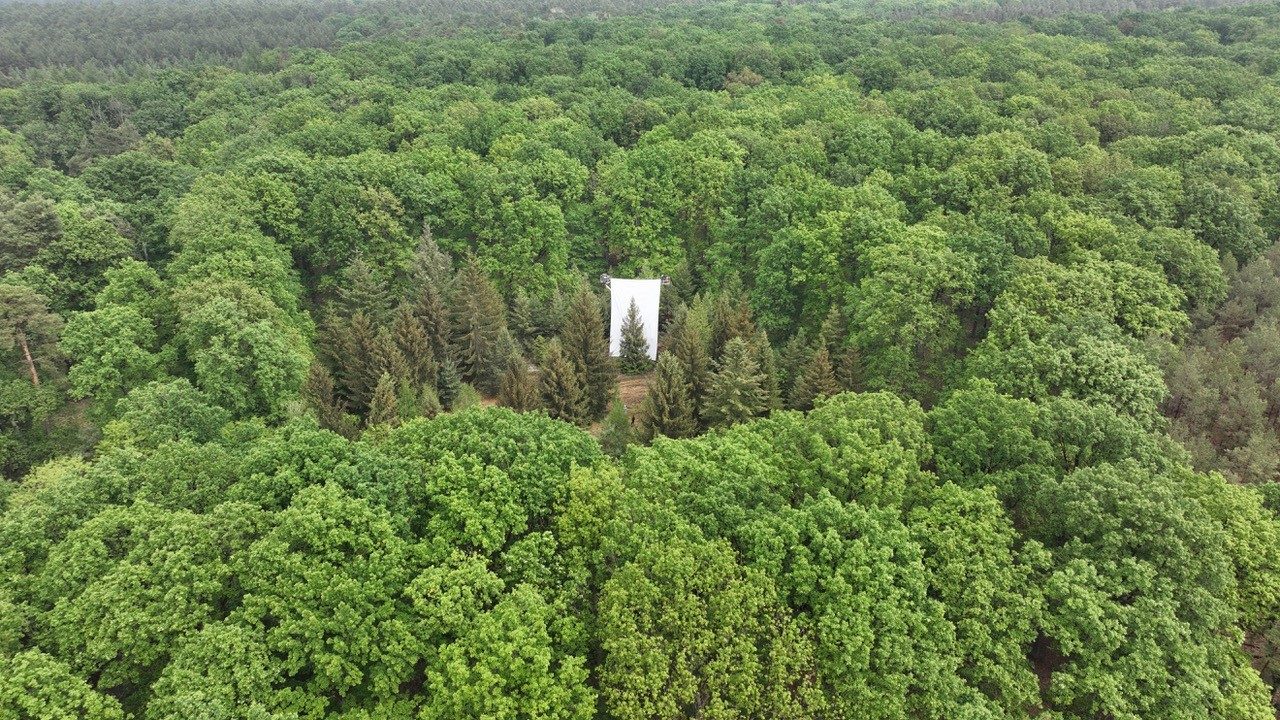
Of course, I hope to find out exactly where the spruce wood for the tower is being sourced from. Probably a spruce monoculture somewhere in Europe, possibly eastern Europe – that’s something I don’t know for certain and is part of the project implementation process. In fact, the first step will be to generally find out where all the materials used in the construction of the Bauhaus-Archiv’s new building come from. To take the photo of the tree, I’ll have to use two lifting platforms to stretch a textile canvas behind the tree so that it looks like it’s standing in front of a screen. Then I’ll photograph sections of the tree using a drone to avoid a distortion in perspective. I’m going to try photographing the spruce tree at the height of each storey of the tower, on which it will be displayed. And that’s why the tree should be exactly as tall as the building. In the end, I’ll arrange the separate photos to create a full image and then drape them across each storey.
In recent years, there’s been a change in how people view expressive forms, and what “Kunst am Bau” can be. It’s not “only” about sculptures or mosaics anymore. I’m also a member of the expert commission for art in public space at the bbk in Berlin (a professional association of visual artists). An important aspect of “Kunst am Bau” is that it generates work for freelance artists. “Kunst am Bau” might not be the sexiest occupational field in the public sphere, but it’s where one can achieve really great things – you just have to know that it exists.
“As I was taking a tour of the construction site, I asked myself how members of the Bauhaus would have progressively approached this building project.”
Lorem ipsum
-
Let’s talk about sustainability. At the opening of the exhibition, you spoke of your motivation for submitting your concept. Can you tell us a little more about that?
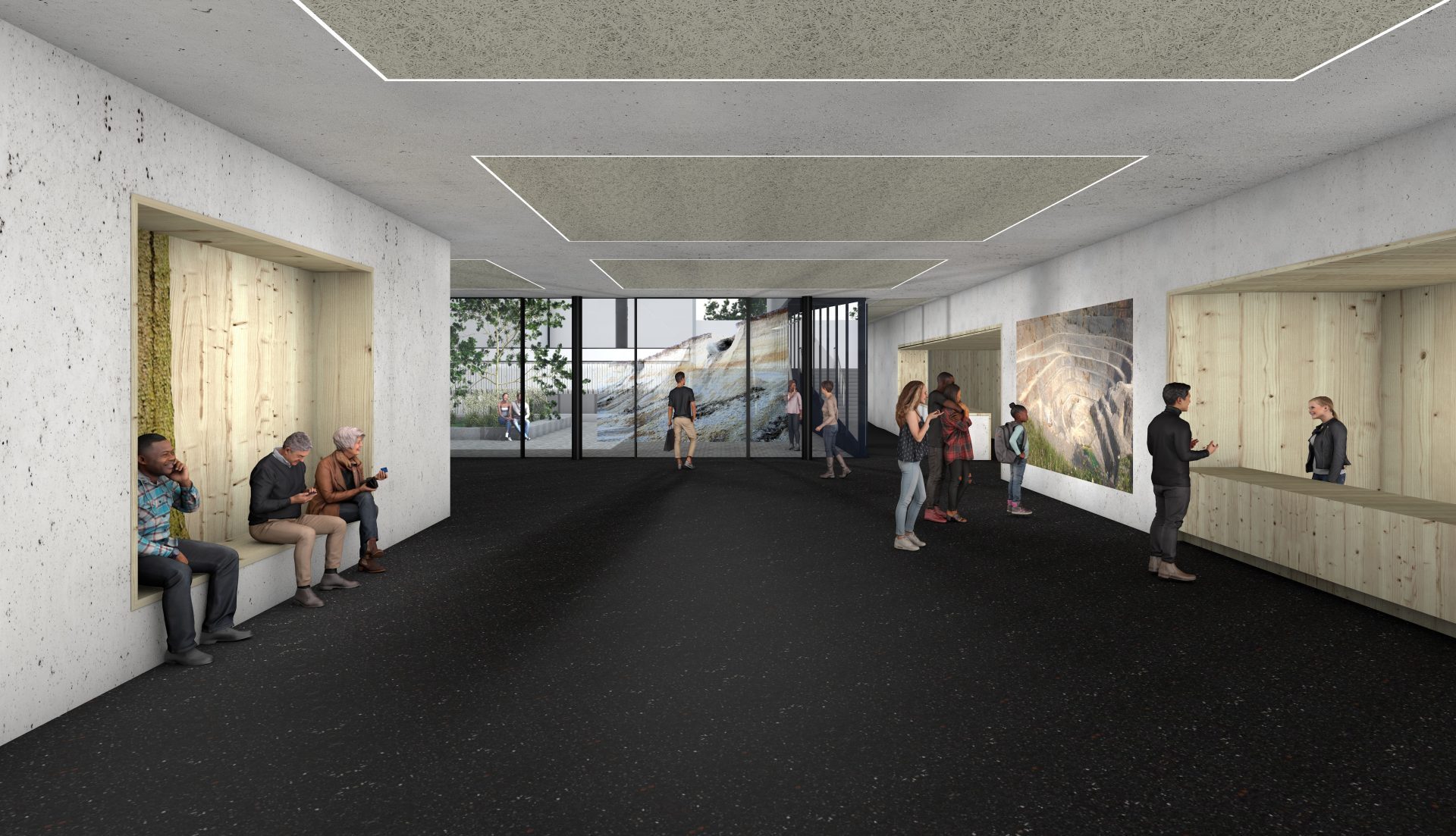
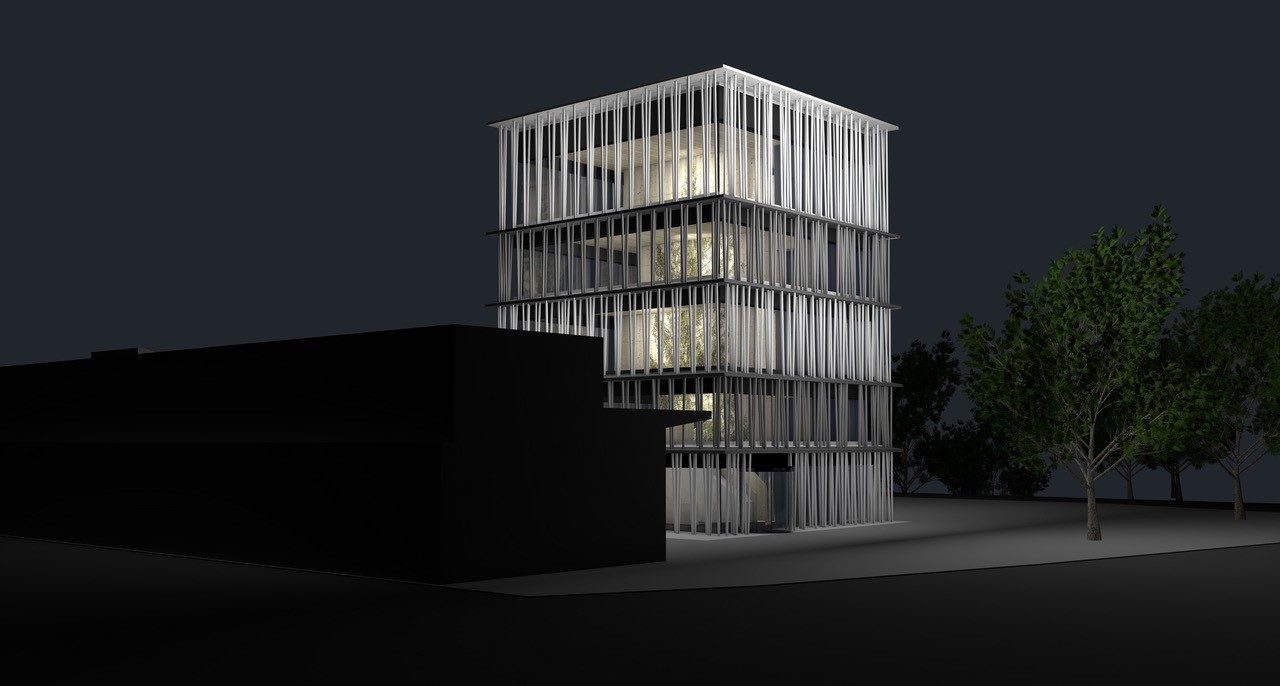
I’d be happy to! In my work and for me in general, sustainability has been a very decisive subject. By now, most of us know that we have limited resources and that our planet itself has limits. In the era of the Bauhaus, people succeeded in developing new methods, new technologies, new materials – achieving progress was all that mattered in the beginning. Environmental consciousness wasn’t a thing. That’s why I found it interesting to focus on the high resource consumption of this building. As I was taking a tour of the construction site, I asked myself how members of the Bauhaus would have progressively approached this building project. I imagined how visitors in the tower would stand there and think “Crazy, this slab of industrial wood – this used to be a tree!”. -
Lorem ipsum
-
At the opening, our director Annemarie Jaeggi emphasised something that distinguishes “Kunst am Bau” for museums: After the project is completed, not only does the artwork become part of the collection, it’s also the only piece that doesn’t disappear into storage one day. Is this an honour for you, or a burden of responsibility?
Both! It’s an incredible honour. I myself studied design, which is why the Bauhaus is such a huge icon for me. That my work will shape and accompany this building is an honour. It’s a great responsibility because the work has to function for a long time without losing its topicality. It will hopefully influence and motivate generations of young designers and maybe even encourage them to consider our world in their own works in terms of environmental factors. -
“I hope my artwork becomes a part of life and work at the Bauhaus-Archiv.”
Lorem ipsum
-
What do you hope the Bauhaus-Archiv will do with your artwork?
I hope it becomes a part of life and work at the Bauhaus-Archiv. That it becomes integrated into the educational activities offered in the tower. I believe it offers good points of reference to build on. The main part of my work consists of three films. They will portray where the construction materials come from. For there is a responsibility that comes with constructing a building nowadays. Based on that, one can present enormous tableaus and draw multifaceted connections. In short, I hope that my artwork will be used and that the people who work at the Bauhaus-Archiv will appreciate it and consider it relevant. -
Lorem ipsum
The Bauhaus-Archiv owns the largest Bauhaus collection in the world. We’ve chosen a photo from the collection – what do you spontaneously associate with it?
I see a figure made of various wooden forms. It looks like it’s moving – very dynamic. It’s a funny little guy wearing a little hat, and I have no idea what it’s holding. In any case, funny and dynamic, caught in motion. Positive emotions!