
Jak R. Maier’s estate: Metal works, self-archiving and missing artworks
In 2013, the Bauhaus-Archiv unexpectedly inherited the estate of Berlin-based artist Jak R. Maier, who died in 2010. Accompanying the exhibition Unpacking Jak R. Maier, we explore his life and work for the first time. Through interviews, essays and reports, we offer fresh perspectives on the artist and provide insights into the museum’s work with his estate.
Who was Maier and how did he produce his artwork over the course of his life?
The artist Jakob Richard Maier a.k.a. Jak R. Maier was born in Tailfingen, Baden-Württemberg in 1933. He came from a long line of metalsmiths – a tradition he initially continued. He completed an apprenticeship with his father from 1947 to 1950 and then found work in the locksmith trade in the following years. In 1957 he earned certification as a master artisan metalsmith in Stuttgart. His training there influenced his career and artistry all his life; from then on, he clearly preferred working with metal and creating small- and large-scale sculptures.
Education and early works
-
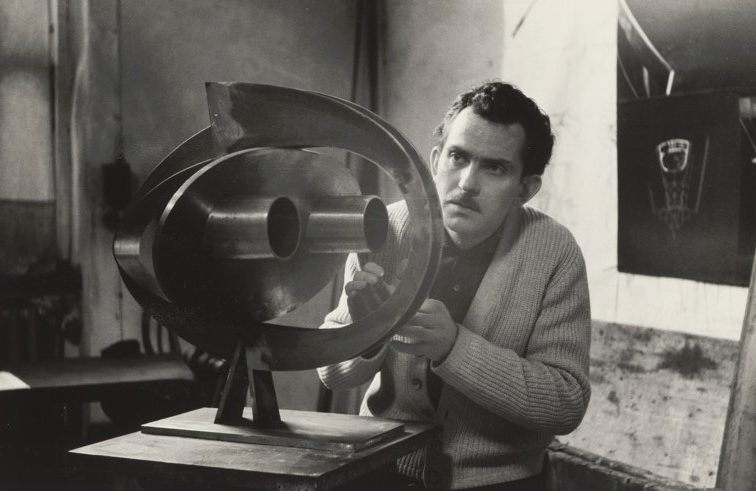
Jak R. Maier studied abroad for a short time in Switzerland and Italy. In 1958 he began attending courses by Prof. Hans Uhlmann at the Berlin State University of the Fine Arts (HfbK, now the Berlin University of the Arts). Shortly thereafter, he enrolled in the Free Art degree programme, but continued taking courses in sculpting on the side.
-
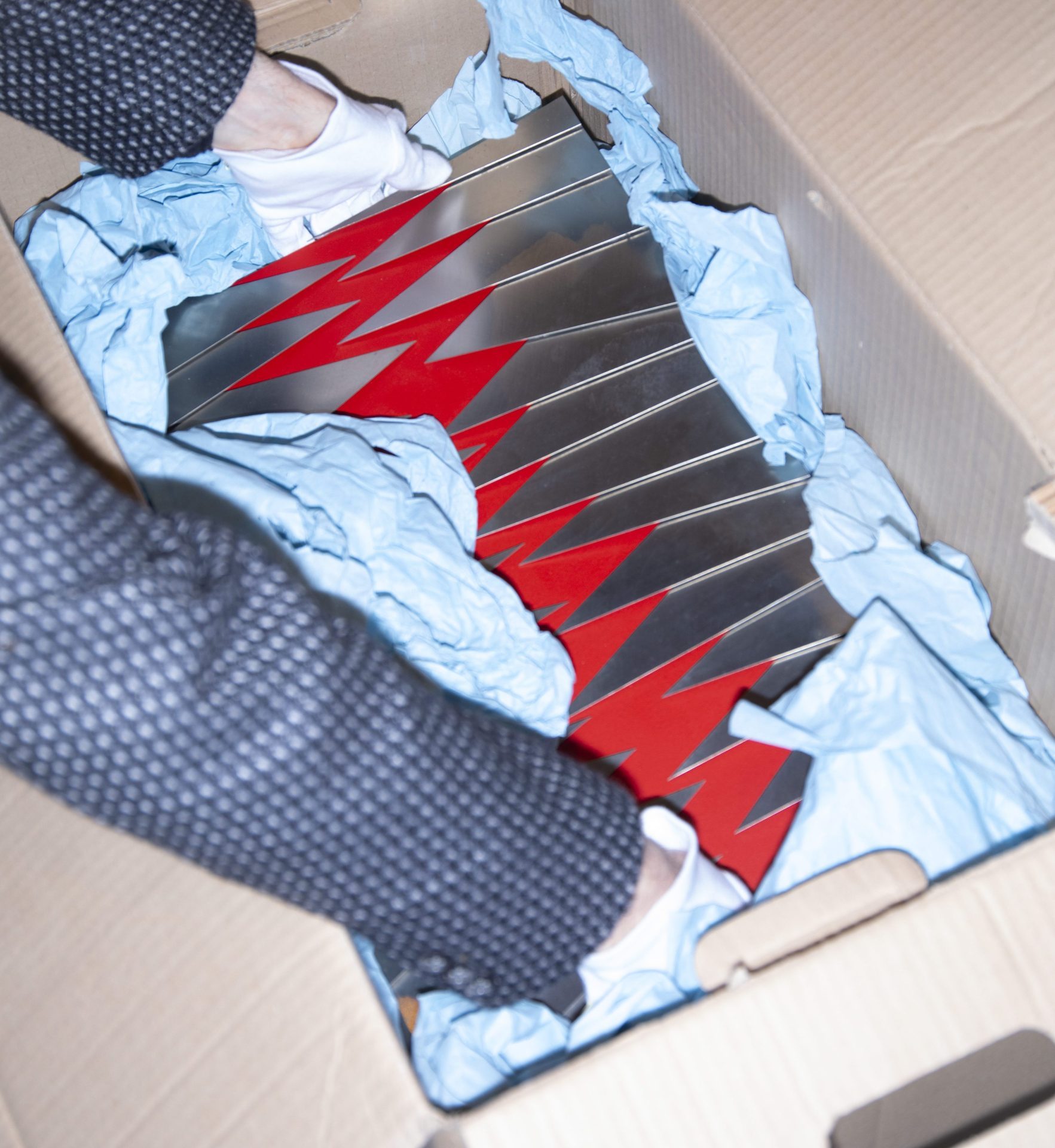
Although Maier’s early sculptures are figurative, his early graphic works are abstract and play with sharp angles and curved lines. From a distance, they resemble a structured pattern. The work from 1964 shown here was created during this phase. After completing his master class, he began working freelance as a metal sculptor.
Ausbildung und frühe Arbeiten
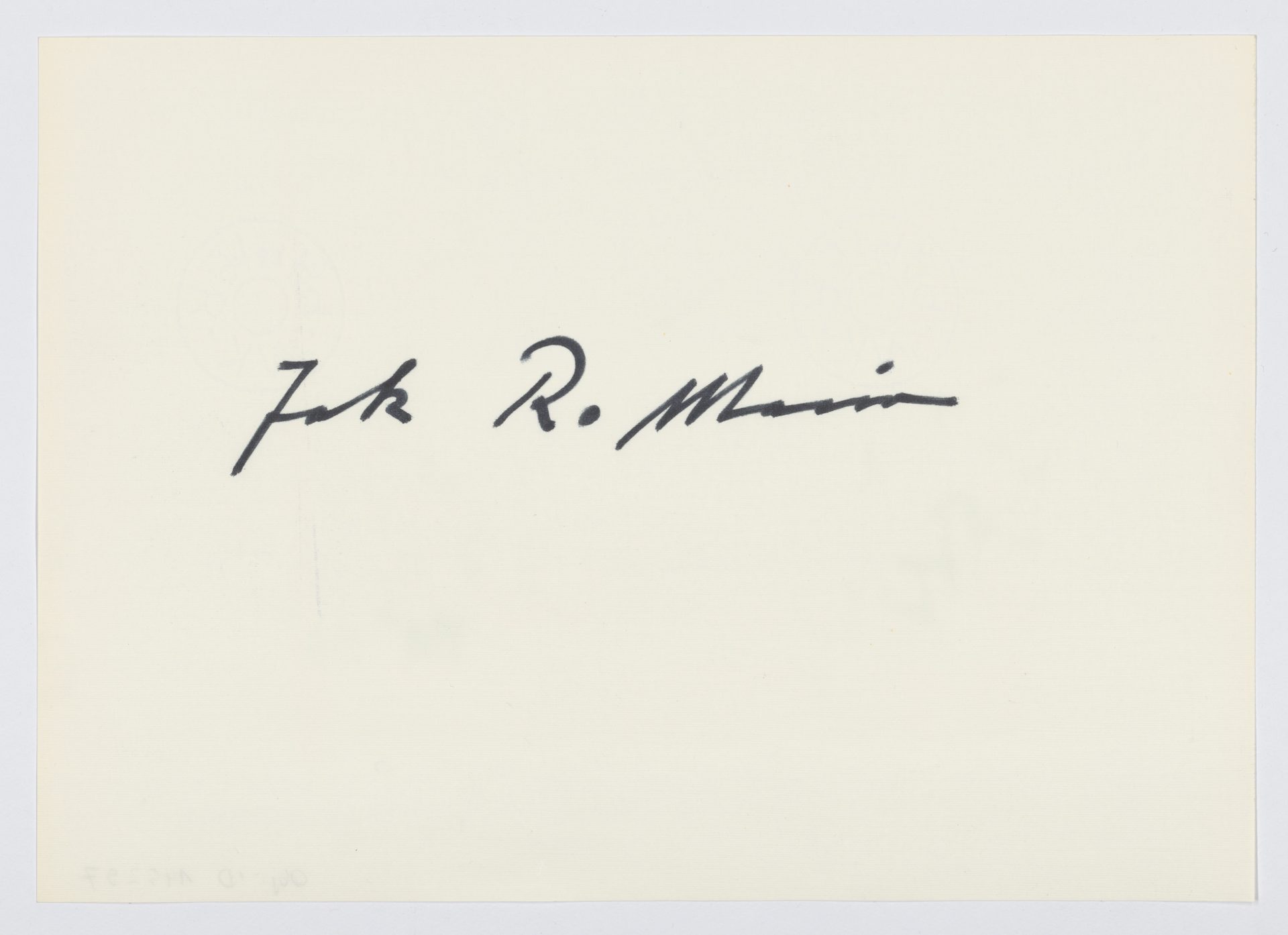
Even at a young age, Jak R. Maier understood the importance of defining his artistic profile. As a student, he adopted various pseudonyms. Jakob Richard Maier became “Giac R. Maier” and then eventually “Jak R. Maier”. We have since learned from his students that he pronounced “Jak” the same way the French pronounce the name Jacques [ʒak]. He also created his own logo consisting of several lines which can be found on many of his works and documents.
This copy of the Black-red composition is the last of a twelve-copy print run. In 1968 Jak R. Maier began teaching at the State Academy for Graphic Arts, Print Media and Advertising. In the following years, he produced numerous graphic prints with runs of up to 50 copies each. In Maier’s estate we also find postcards featuring various motifs. Today we can only guess what he aimed to achieve with these print runs and postcards. Perhaps Maier realised he wouldn’t be able to earn enough from single pieces and therefore decided to sell inexpensively produced copies of his graphic works. We know that Maier was in charge of the graphic workshop; it’s also possible he produced the sheets as part of his lessons.
Early metal works
Jak R. Maier’s early sculptures were predominantly figurative in nature. The sculptures of flowers, animals or human figures look as if they were formed with modelling clay. At some point Maier began documenting his work photographically. The early sculptures are arranged in a living room – on a fireplace mantle, a windowsill or a table in front of woodchip wallpaper. The sculpture in this photo is standing on a porous ledge of natural stone in front of a textured plaster surface. These textures evoke a strongly haptic impression and help accentuate the artisanal appearance of Maier’s handmade works. The curved body of the figure about to take a giant leap appears to have been shaped by a gentle twist of Jak R. Maier’s hand.
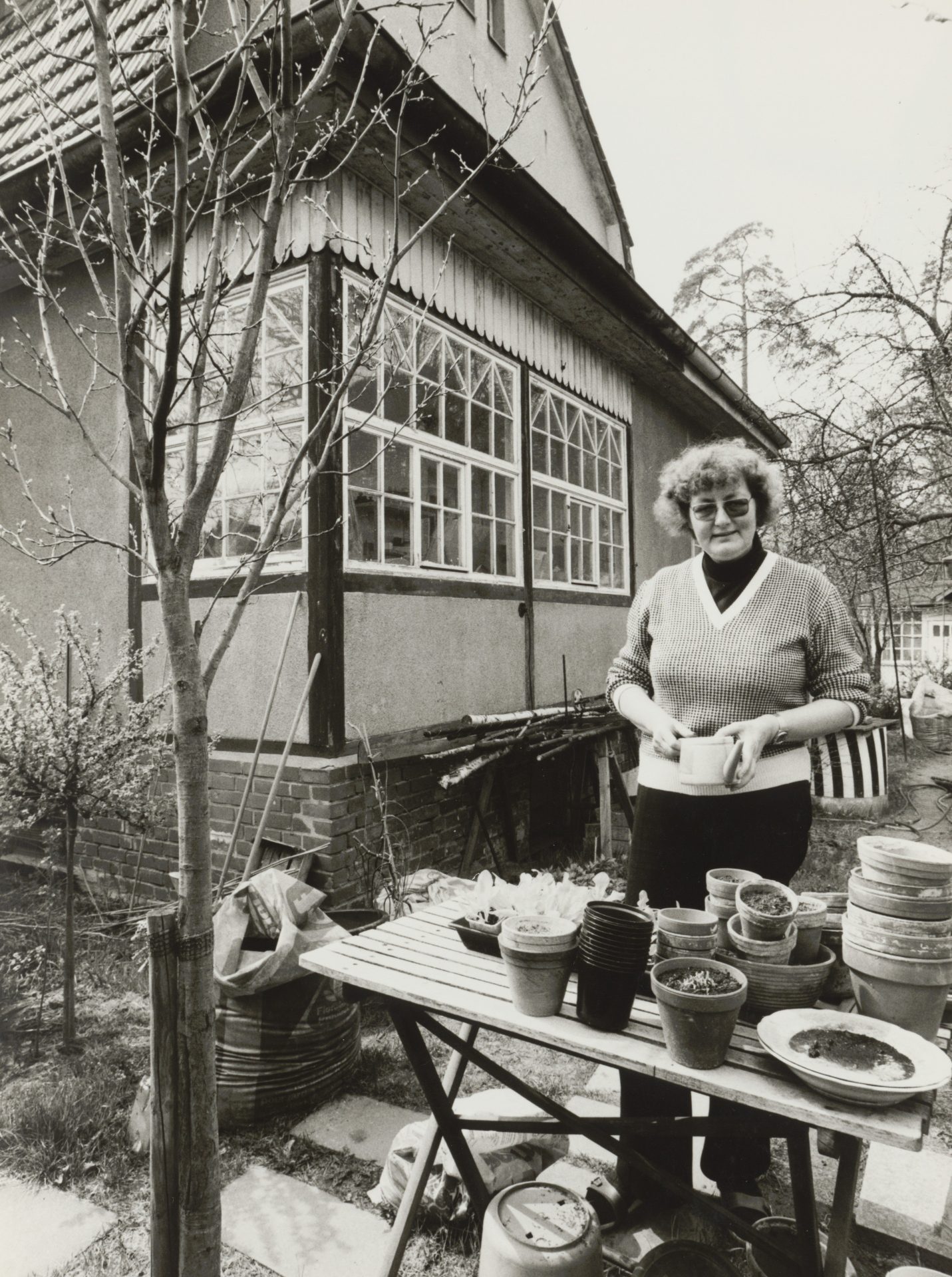
Jakob and Marianne Maier
-
Jak R. Maier married Marianne Lüttcher in 1962. They spent the rest of their lives together and lived in their single-family home in Berlin-Reinickendorf until their death. Their joint estate not only contained Maier’s artistic works, but a large number of private photo albums which captured moments of their life as a couple.
-
Over many years, Maier documented his work and his life. Hundreds of albums contain photos of models and sculptures, as well as snapshots of him in the metal workshop, in the garden with Marianne or with friends. Maier was also a passionate collector and was especially enamoured by clocks and cars. Many pictures of these can be found in the photo albums as well. Much time and effort must have gone into making these albums. We still do not know for sure who created them – Maier himself or perhaps his wife Marianne Maier?
Models in space
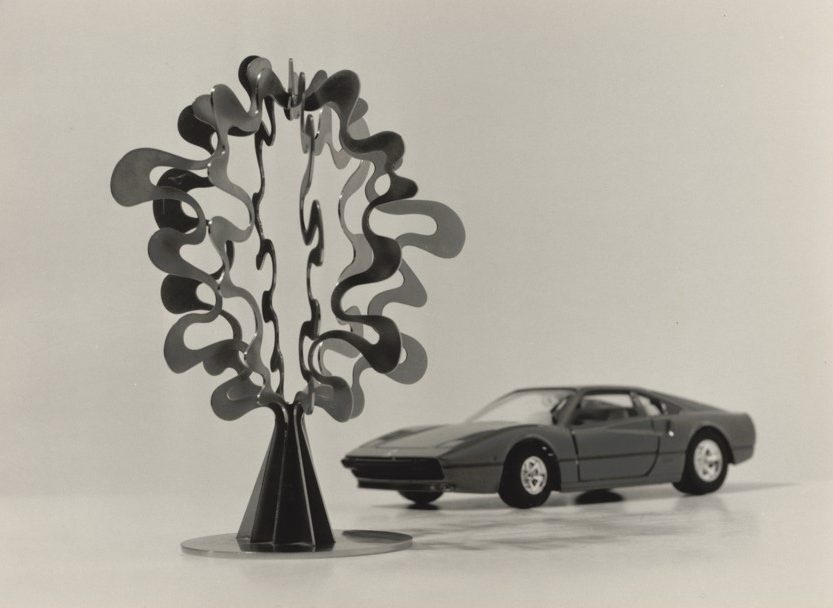
Jak R. Maier presented his works in staged scenes – initially in his living quarters, but later more frequently in neutral surroundings. The often miniature models of his sculptures assume the role of protagonists, and the background usually plays to and emphasises their materiality. His later works are frequently made of smooth steel, and their painted or polished surfaces sparkle. But when photographed in a white box, their dimensions become distorted, and the spatial boundaries blur. In such cases, the size of the figures can only be estimated by a small matchbox sports car or the ghostly mirage of an unknown woman.
Art in public space
Jak R. Maier created models in numerous variations, but very few of his sculptures were actually produced to scale. Today, only one of his sculptures is known to exist in public space: “Sportler in Aktion” (Athlete in Action) can still be admired on the Zollernalb Kunstweg in Albstadt-Truchtelfingen in Baden-Württemberg. His other works have all but disappeared from the public eye. One of Maier’s most striking sculptures was erected in front of the Berlin-Wilmersdorf city hall in the 1980s, but its present location is unknown. We have no idea why his works have vanished from these urban venues. Perhaps they no longer reflected the taste of the times? Were they perhaps too costly to maintain?
-
The estate of Jak R. and Marianne Maier also includes personal items and private photos. They show them visiting the Berlin Zoo and spending nice evenings at the local pub. His qualitative demands on analogue photography are quite remarkable. Especially the small-format contact prints have a high resolution. They document Maier’s clock collection, one of the few sculptures ever installed in public space, birds in his garden and his car from multiple perspectives. The viewers can decide for themselves what Maier’s true intention was. Were these simply photographic finger exercises, or did he want to document his life for posterity? Whatever the reason, these photos make the couple’s life tangible to us today. They suddenly seem very familiar to us
-
Jak R. Maier loved nature. In his estate we find many photo albums which show him and Marianne taking hikes together. His love for nature is also evident in his artwork. He forged the steel and metal into sweeping curves and organic forms. Many of his sculptures were conceived as water fountains. In these pieces, the element of water meets the cold material of stainless steel and together they create a symbiosis. Jak R. Maier passed away in 2010, and his wife Marianne Maier followed in 2013. In their testament, they left their estate to the Bauhaus-Archiv.
Jak R. Maier in Focus
-
Annemarie Jaeggi about the unexpected bequest for the Bauhaus-Archiv
-
Of Photo Albums, Sports Cars and Garden Clippers
-
Gloria Fock about the things we leave behind
-
Nina Wiedemeyer about the “ideal Bauhaus artist”
-
Anna Kathrin Distelkamp im Interview: „Die Übernahme eines künstlerischen Nachlasses bedeutet eine große Verantwortung“