
Schwerin Wooden Toys – A Bauhaus Workshop in Jerusalem
The Bauhaus-Archiv collection contains some 1,000,000 objects that document the history of the famous art school. The Archive’s team regularly uncovers new works that offer fascinating insights into the Bauhaus. Every so often, our curators present selected pieces that have been newly added to the collection. In the following, we present wooden toys created by Heinz and Ricarda Schwerin.
In 2021 the children of Heinz and Ricarda Schwerin gifted the Bauhaus-Archiv a generous collection of toys, drawings, furniture designs, jewellery, photos and advertising material.
Ricarda Meltzer and Heinz Schwerin first met at the Bauhaus. Since both were actively involved in communist politics, they were forced to leave the school in 1932. When the Nazis seized power, they found themselves in peril. Heinz was arrested on account of his communist activities but fortunately was able to escape. Thanks to the resolve and assistance of their former classmates Etel Mittag and Ernst Fodor, both Ricarda and Heinz were able to flee to Palestine via Switzerland and Hungary in 1935.
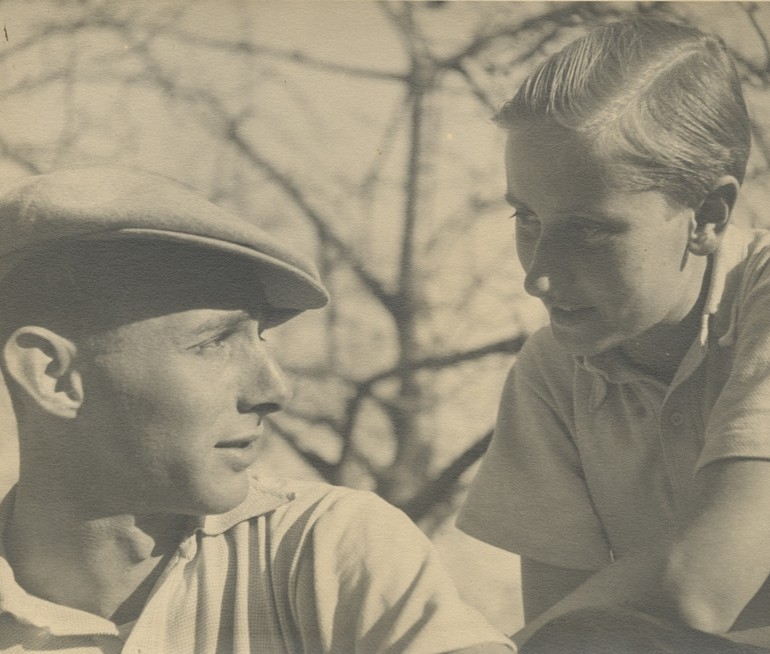
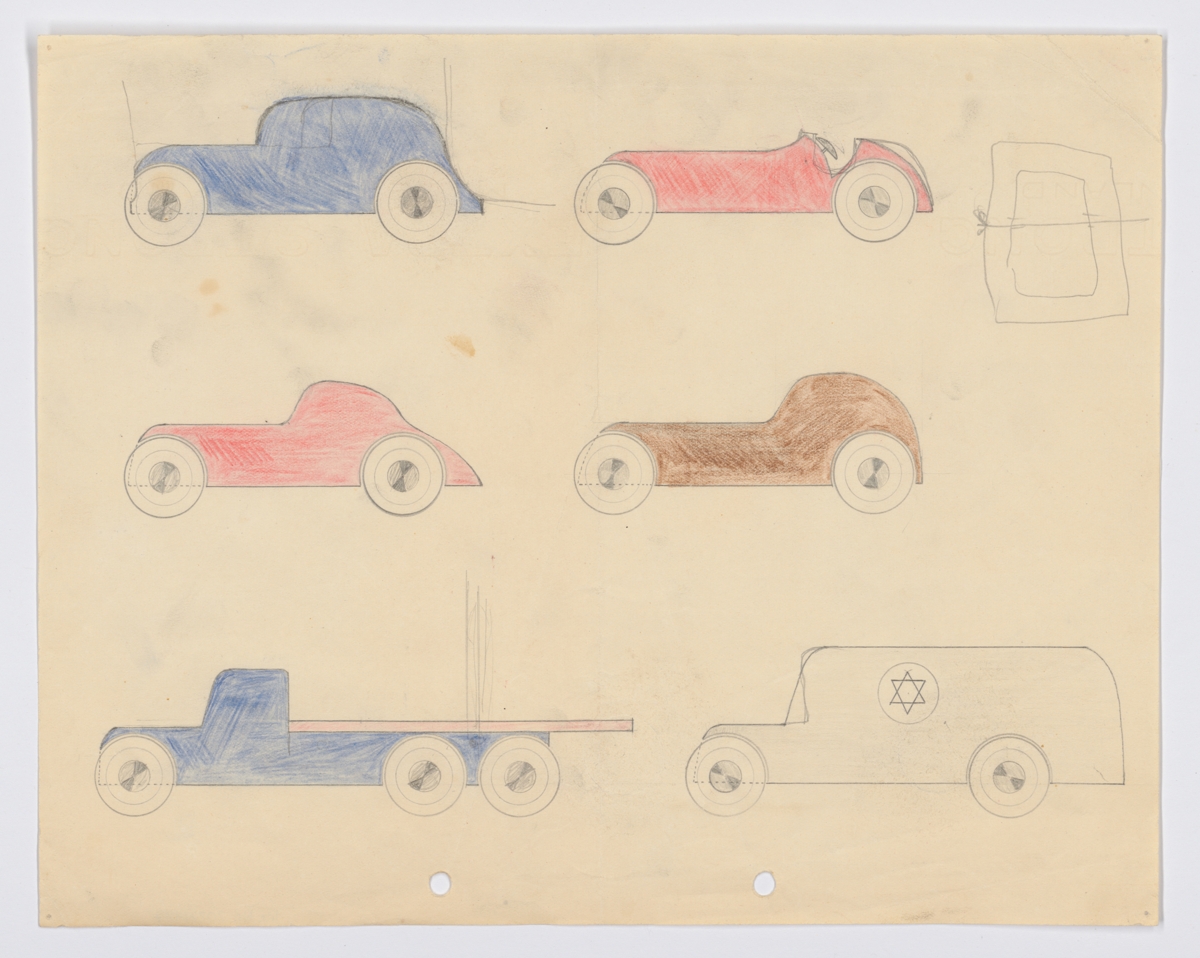
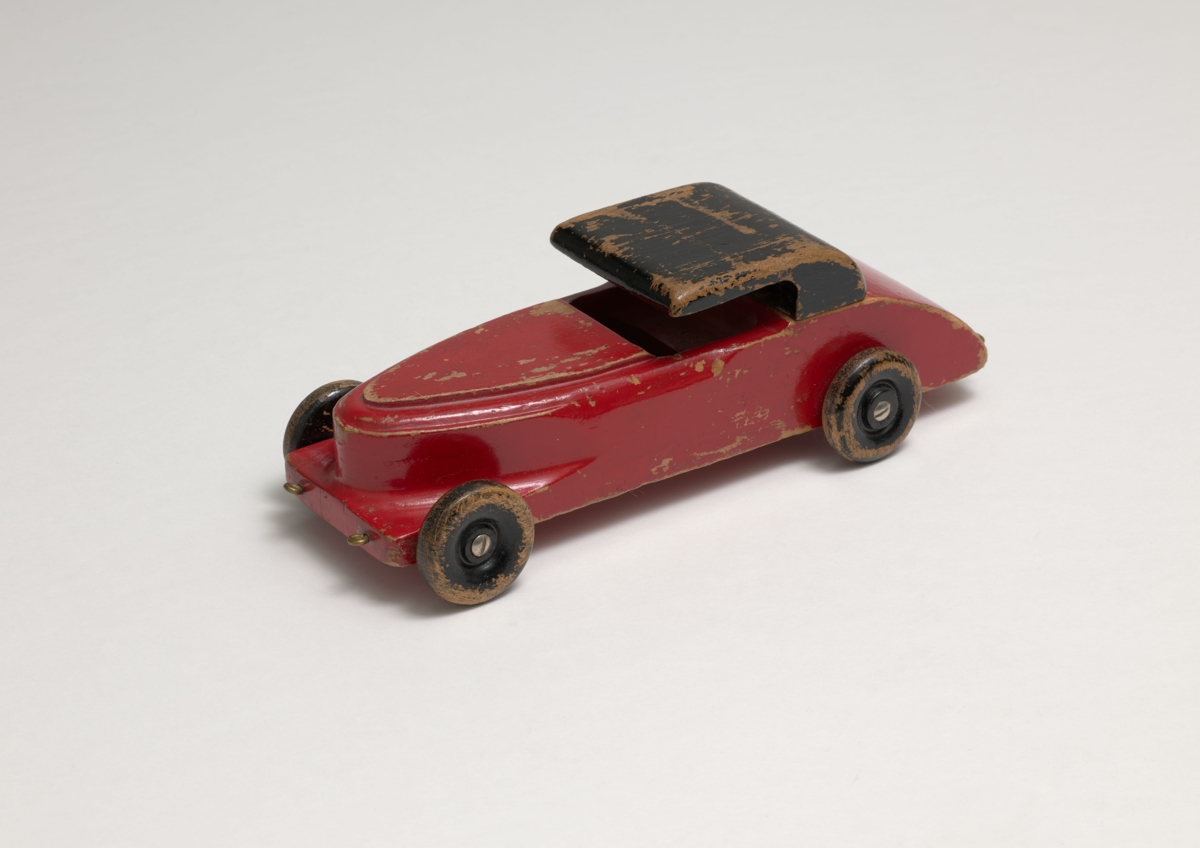
After settling in Jerusalem, Heinz and Ricarda Schwerin set up a workshop, producing toys which they sold and displayed under the name “Schwerin Wooden Toys”. In a letter to former Bauhaus director Hannes Meyer in 1948, Ricarda Schwerin described their activities in hindsight. The production of the workshop helped them weather financial crisis and provided them with a certain degree of independence. In a self-made brochure, they listed their seven design principles, which correlate closely with reform-pedagogical principles. They believed toys should be stable, washable, simple in design, safe, inexpensive and stimulating to the imagination. They confidently concluded the list of principles by declaring “You should be a ‘Schwerin Wooden Toy’”.
Architektur mit Motiven aus dem Schiffsbau
Despite their fulfilling occupation as toymakers and their continued contact with friends from their time at the Bauhaus, the couple’s son Tom Segev recalled in a taz interview with Sonja Vogel on 13 July 2013 that his parents “had lost a high culture […], to which the Bauhaus certainly belonged […]. They lived here as they would have in Europe – but also in an illusion, a Bauhaus illusion.”
Heinz Schwerin died in an accident in 1948. Ricarda started an aid organisation for refugee children, and in the mid-1950s, pursued an increasingly successful career as a photographer. Numerous influential figures of that time had their portraits taken by Ricarda Schwerin, e.g. Hannah Arendt: Schwerin took the now famous picture of the philosopher holding a cigarette in an armchair.
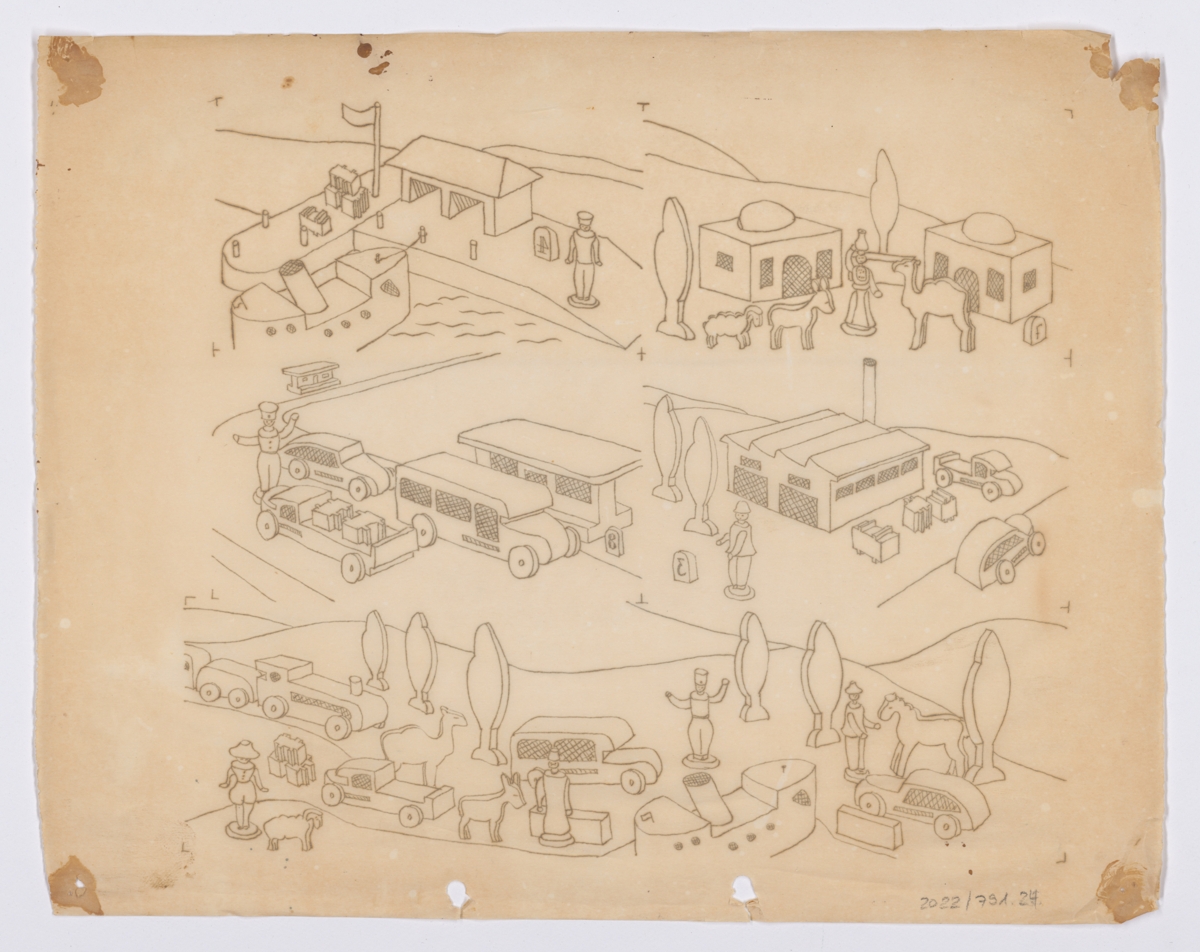
Heinz and Ricarda Schwerin’s studies at the Bauhaus significantly shaped their transcultural life. Their works enrich the collection of the Bauhaus-Archiv in numerous ways. The Bauhaus was home to an international community of students who learned, taught and felt a close connection to the school’s design principles long after their studies. In this regard, the products of the “Schwerin Wooden Toys” workshop exemplify the tenacity of two politically persecuted members of the Bauhaus. Their fate has much in common with that of many other Bauhaus students who also had to flee National Socialism. And perhaps most importantly, their toys demonstrate how much games and toy design have fascinated the Bauhaus artists.